


John Negroponte
Death Squad supporter put in charge of US spy agencies
note: as of 2008, Negroponte is deputy secretary of State, merely the latest position of important service to the Empire.
http://cryptome.org/negro-eyeball.htm
Eyeballing John Negroponte
Institute for Public Accuracy
Friday, February 18, 2005
Negroponte Appointment: Topping a Career of Human-Rights Violations
DIANNA ORTIZ, diortiz @ tassc.org, http://www.tassc.org, http://www.speaktruth.org/defend/profiles/profile_09.asp
Sister Dianna Ortiz is the executive director of Torture Abolition and Survivors Support Coalition International. She was abducted and tortured in Guatemala while teaching indigenous children to read. She said today: "For those of us who work in the area of human rights, this is yet another sad day. The Bush administration seems determined to promote persons whose careers have been closely associated with torture. Could the administration not find one person for the job who has a demonstrated concern for defending human rights? Certainly, John Negroponte does not fit that bill. His nomination is appalling and an insult to those who have survived torture -- one more slap on the face by the current administration."LAETITIA BORDES, lbordes @ jps.net, www.afrocubaweb.com/negroponte.htm
Sister Laetitia Bordes led a campaign during Negroponte's nomination as ambassador to the United Nations. She traveled to Honduras on a fact-finding delegation during his tenure there and met with him. She said today: "During his nomination to the U.N. ambassadorship, we carried out a public information campaign detailing how Negroponte gave the CIA-backed Honduran death squads an open field when he was ambassador to Honduras. His hearings, however, were held a couple of days after the 9/11 tragedy, so he was hurriedly confirmed as people did not want prolonged hearings in that environment. That's how he got confirmed the first time. ... Negroponte collaborated with human-rights violators everywhere he has been; his record is public. Our Congress is letting us down again: Negroponte is once again being promoted instead of being held accountable. ... During Negroponte's tenure, U.S. military aid to Honduras grew from $4 million to $77.4 million; the U.S. launched a covert war against Nicaragua and mined its harbors; and the U.S. trained Honduran military to support the Contras." [An Associated Press story states: "During 2001 confirmation hearings for his U.N. ambassadorship -- an appointment that was delayed for six months because of the controversy over his tenure in Honduras -- Negroponte testified that he did not believe death squads were operating in Honduras."]ROBERT PARRY, secrecyprivilege @ aol.com, www.consortiumnews.com
Parry broke many of the Iran-Contra stories in the 1980s as a reporter for the Associated Press and Newsweek. He said today: "The choice of John Negroponte to be the first U.S. intelligence czar -- following Elliott Abrams's promotion to be deputy national security adviser -- marks the continued reemergence of officials tied to the darkest moments of Central American violence in the 1980s. There's also irony entrusting Negroponte to oversee objective intelligence analysis, since either he was oblivious to illicit behavior going on around him as U.S. ambassador to Honduras or he was complicit in a wide range of human rights abuses."PETER KORNBLUH, pkorn@gwu.edu, www.gwu.edu/~nsarchiv/index.html
Kornbluh is senior analyst with the National Security Archive in Washington, D.C. He was co-director of the Iran-Contra documentation project and director of the Archive's project on U.S. policy toward Nicaragua. He is the co-editor of "The Iran-Contra Scandal: A Declassified History." He said today: "The documents ... showed that Negroponte helped clear the way for a secret agreement under which the United States would provide more CIA money to Honduran army generals and additional military and economic aid to the country. In exchange, Honduras agreed to allow the Contras to continue operating on Honduran soil."RAY McGOVERN, rmcgovern @ slschool.org
McGovern is a 27-year veteran of the CIA. He said today: "Negroponte's record does not inspire confidence that he will tell the president anything that is likely to disturb him, or Cheney, or Rumsfeld. The upshot is that there is likely to be simply one more bureaucratic level at which intelligence can be politicized."LARRY BIRNS, coha @ coha.org, http://www.coha.org
Birns is director of the Council on Hemispheric Affairs. He said today: "Affidavits and testimony by Honduran survivors have reported on his involvement in sanctioning, protecting or covering up these death squads. Also, during the time Negroponte spent at the Tegucigalpa embassy, millions of dollars in bribes were paid to corrupt Honduran officials to allow room for the U.S.-backed Contras to stage attacks on the Sandinistas in neighboring Nicaragua. Negroponte has claimed that he did not recall any human rights violations ever having taken place in the country during his time there. ... Bush had made a brilliant if demonic appointment. Negroponte will likely get the job done, but at an insupportable cost to this and other countries' democratic institutions as he brings his well-tested authoritarian personality to the job."
www.counterpunch.org/roselle03022005.html
February 19 / 20, 2005
John Negroponte, Dirty Warrior
The Return of the Contra Gangsters
By JENNIFER ROESCH
NEGROPONTE NOT ALL THAT INTELLIGENT
http://www.americanprogressaction.org/site/pp.asp?c=klLWJcP7H&b=124597
AMERICAN PROGRESS - Negroponte has precious little intelligence experience. And the experience he does have has been characterized by abject failure. As an ambassador to the U.N., he pushed inaccurate intelligence about Iraq's supposed weapons of mass destruction as a justification for war. In December 2002, he called an Iraqi declaration that they didn't have any weapons of mass destruction "an insult to our intelligence." In January 2003 he said, "we are convinced that Iraq maintains and continues to pursue its WMD programs." At the same press conference, asked whether the administration knew Iraq was using aluminum tubes to enrich uranium for a nuclear weapons program, Negroponte replied, "the answer is definitively yes."
NEGROPONTE RAN ROGUE SPY OP IN IRAQ
www.wsws.org/articles/2005/feb2005/negr-f18.shtml
WORLD SOCIALIST - Ironically, while Negroponte is ostensibly tasked with unifying the disparate intelligence agencies, he has been accused of launching his own rogue intelligence operation in Iraq. The US think tank Stratfor, which has close links to US military and intelligence circles, reported that Negroponte ran his own "parallel intelligence service" in Iraq, because he did not trust the CIA's Baghdad station chief.
There has been a proliferation of such informal intelligence services, Stratfor noted, most famously the Pentagon's "counter-terrorism evaluation group," created to substantiate the bogus claims of ties between the Iraqi regime and Al Qaeda.
The spread of such off-the-books operations, Stratfor noted, "sets up the new national intelligence director - yet to be appointed - for failure As long as government agencies and on-the-side intel projects undermine each other, the NID will not be able to bring all intelligence efforts under one umbrella. The proliferation of small, separate intelligence groups also hurts collection efforts by impeding the governmenT's ability to paint a clear picture of the realities on the groundóin Iraq and elsewhere."
Negroponte's objective was just that - to counteract the assessment of the CIA, whose station chief filed an end-of-the year report giving a bleak assessment of the US occupation and warning that resistance could spiral out of control. Negroponte answered the assessment with a lengthy dissenting report of his own, painting a far rosier picture of what is widely seen as a debacle, not only in the CIA, but within the State Department and military as well.
As national intelligence director, Negroponte will doubtless continue along these lines, pressing the CIA and other intelligence agencies to tailor their assessments to meet the political needs of the administration. In this regard, he will be aligned with the new director of the CIA, Peter Goss, who issued a memo to the intelligence agencyís employees last November warning them not to "identify with, support or champion opposition to the administration or its policies."
DAVID JOHNSTON, NY TIMES - Under pressure from the White House, the Federal Bureau of Investigation has agreed to adopt the recommendations of a presidential commission and will allow the director of national intelligence, John D. Negroponte, to help choose a powerful intelligence chief at the F.B.I., Bush administration officials say.
The appointment would for the first time in the bureau's history give an outsider a significant role in the selection of a high-level official at the F.B.I., an agency long regarded by its critics as fiercely protective of its turf and resistant to change. The intelligence chief, who will be chosen jointly by Mr. Negroponte and the director of the F.B.I., Robert S. Mueller III, would have the tentative title of associate director for intelligence and in effect be the third-ranking official at the bureau.
www.nytimes.com/2005/06/12/politics/12fbi.html
?hp&ex=1118635200&en=fa8bf5042f1f6822&ei=5094&partner=homepage
AMERICAN PROGRESS - Negroponte has precious little intelligence experience. And the experience he does have has been characterized by abject failure. As an ambassador to the U.N., he pushed inaccurate intelligence about Iraq's supposed weapons of mass destruction as a justification for war. In December 2002, he called an Iraqi declaration that they didn't have any weapons of mass destruction "an insult to our intelligence." In January 2003 he said, "we are convinced that Iraq maintains and continues to pursue its WMD programs." At the same press conference, asked whether the administration knew Iraq was using aluminum tubes to enrich uranium for a nuclear weapons program, Negroponte replied, "the answer is definitively yes."
www.americanprogressaction.org/site/pp.asp?c=klLWJcP7H&b=124597
WORLD SOCIALIST - Ironically, while Negroponte is ostensibly tasked with unifying the disparate intelligence agencies, he has been accused of launching his own rogue intelligence operation in Iraq. The US think tank Stratfor, which has close links to US military and intelligence circles, reported that Negroponte ran his own "parallel intelligence service" in Iraq, because he did not trust the CIA's Baghdad station chief. There has been a proliferation of such informal intelligence services, Stratfor noted, most famously the Pentagon's "counter-terrorism evaluation group," created to substantiate the bogus claims of ties between the Iraqi regime and Al Qaeda.
www.wsws.org/articles/2005/feb2005/negr-f18.shtml
WIKIPEDIA - From 1981 to 1985 Negroponte was US ambassador to Honduras. During his tenure, he oversaw the growth of military aid to Honduras from $4 million to $77 million a year. At the time, Honduras was ruled by an elected but heavily militarily-influenced government. .
Negroponte supervised the construction of the El Aguacate air base where Nicaraguan Contras were trained by the US, and which critics say was used as a secret detention and torture center during the 1980s. In August 2001, excavations at the base discovered 185 corpses, including two Americans, who are thought to have been killed and buried at the site.
Records also show that a special intelligence unit (commonly referred to as a "death squad") of the Honduran armed forces, Battalion 3-16, trained by the CIA and Argentine military, kidnapped, tortured and killed hundreds of people, including US missionaries. Critics charge that Negroponte knew about these human rights violations and yet continued to collaborate with the Honduran military while lying to Congress. . .
The question of what John Negroponte knew about human rights abuses in Honduras will probably never be answered definitively, but there is a large body of circumstantial evidence supporting the view that Negroponte was aware that serious violations of human rights were carried out by the Honduran government with the support of the CIA
http://en.wikipedia.org/wiki/John_Negroponte#Ambassador_to_Honduras
MARYKNOLL GLOBAL CONCERNS - In addition to his work with the Nicaraguan Contra army, Negroponte helped conceal from Congress the murder, kidnapping and torture abuses of a CIA-equipped and -trained Honduran military unit, Battalion 3-16. No mention of these human rights violations ever appeared in State Department Human Rights reports for Honduras. The Baltimore Sun reports that Efrain Diaz Arrivillaga, then a delegate in the Honduran Congress and a voice of dissent, told the Sun that he complained to Negroponte on numerous occasions about the Honduran military's human rights abuses.
http://www.maryknoll.org/GLOBAL/ALERTS/no_negroponte.htm
GHALI HASSAN, COUNTERPUNCH, 2004 - At the time Mr. Negroponte was in Honduras, Honduras was a military dictatorship. Kidnapping, rape, torture and executions of dissidents was rampant. The military top and middle ranks were U.S-trained at the School of the Americas, the Harvard version of the CIA, based in Fort Benning, Georgia. According to Human Rights Watch, graduates of the SOA are responsible for the worst human rights abuses and torture of dissidents in Latin America. Some of its 60,000 graduates are notorious Manuel Noriega and Omar Torrijos of Panama. . .
http://counterpunch.org/hassan06042004.html
www.ww4report.com/negropontedeathsquad
?PHPSESSID=9d6f7f4c91abd8814614b909e0223f5c
JOHN NEGROPONTE & THE DEATH-SQUAD CONNECTION
Bush Nominates Terrorist for National Intelligence Director
by Frank Morales
"He will be a key figure in US counter-terror operations." --BBC News, Feb. 17, 2005
"I think he could have stopped all these assassinations and torture... We're against this nomination. If he didn't see human rights violations in Honduras, it's possible he won't see human rights violations anywhere in the world." --Leo Valladares Lanza, former head, Honduran Human Rights Commission, quoted in New York Times, March 29, 2005
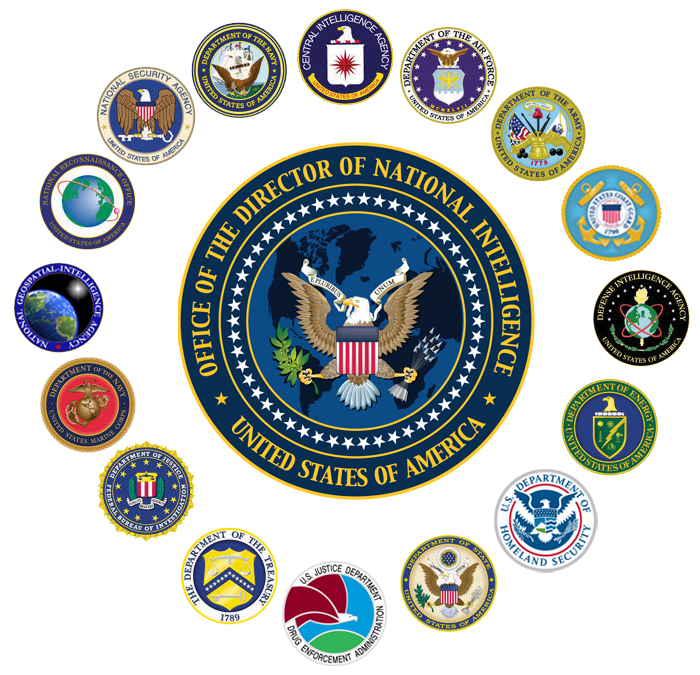
On February 17, 2005, President George W. Bush nominated John Negroponte, 65, to be the United States' first National Intelligence Director." According to various published reports, Negroponte will be the president's "primary briefer" in the area of global and domestic intelligence and counter-terror operations, coordinating and overseeing the Central Intelligence Agency (CIA), Defense Intelligence Agency (DIA), National Security Agency (NSA), Federal Bureau of Investigation (FBI) and other agencies.
His upcoming Senate confirmation seems assured, and that is a scary prospect. Why? Because Negroponte has a long and bloody criminal history, dating back to the early 1960s, of overseeing the training and arming of death squads, schooled in the techniques of torture, "forced interrogation," assassination and, as we shall see, even genocide. He has been described as an "old-fashioned imperialist," active for nearly four decades in Vietnam, Central America, the Philippines, Mexico and most recently Iraq. He got his start back in the days of the CIA's Phoenix program, which assassinated some 40,000 Vietnamese "subversives."
According to Bush, the ultra-rightist Negroponte has a real grip on today's "global intelligence needs." Indeed he does. Negroponte's long career in the "foreign service" has equipped him well to fulfill the requirements of global and domestic counterinsurgency. So while newly-installed Attorney General Gonzales supplies the legal basis for torture (as he did as a Bush White House counsel), and recently-installed Homeland Security czar Michael Chertoff acquiesces (as he did as a Justice Department pointman on the post-9-11 sweeps), Negroponte is now in a position to ratchet up the repression domestically, and further the dissolution of democracy at home.
Although Negroponte's office will be in its own projected $200 million headquarters, Bush has said that Negroponte "will have access on a daily basis." Negroponte has actually had close presidential access for awhile. Not quite four years ago, on Sept. 18, 2001, as the embers were still smoking at Lower Manhattan's Ground Zero, Negroponte was appointed U.S. Representative to the United Nations. His mission was to work the floor and backrooms in preparation for Colin Powell's infamous February 2003 presentation to the UN making the case for war on Iraq--which even Powell now admits was based on falsehoods. Then in April 2004, with a counter-insurgency war in Iraq rapidly spreading, Bush nominated Negroponte to be U.S. Ambassador to that occupied nation following the June 2004 hand-over of "sovereignty" to as-yet "undetermined Iraqi authorities."
RAP SHEET
Negroponte was born in London in 1939, the son of a Greek-American shipping magnate. A graduate of Yale University, raised on New York's Park Avenue, he was a "career diplomat" between 1960 and 1997, serving in eight countries in Asia, Europe and Latin America, as well as holding positions in the State Department and White House. From 1971 to 1973, Negroponte was the officer-in-charge for Vietnam at the National Security Council (NSC) under Henry Kissinger, having worked as a "political affairs officer" (read: CIA) at the US Embassy in Saigon starting as early as 1964. At that time, he shared a room with Richard Holbrooke, then an official for the Agency for International Development, later US ambassador to the UN under Clinton. Negroponte and Holbrooke both became members of the Council on Foreign Relations (CFR), the oldest and most prestigious of U.S. foreign policy think-tanks. Following Vietnam, Negroponte went on to "serve" for a number of years as an "economics officer" working out of the US Embassy in Ecuador.
Negroponte was appointed in 1981 by President Ronald Reagan to head up the U.S, Embassy in Honduras, where he stayed quite busy through 1985. From 1987-1989, he was deputy assistant to the president for national security affairs, reporting to Colin Powell. From 1989-1993, he was ambassador to Mexico. Following a stint as ambassador to the Philippines from 1993-1997, he "retired" from the diplomatic corps and took a well-paid position as vice president for global markets at McGraw-Hill, the big publishing company.
In 1981 President Reagan authorized paramilitary operations against the leftist government of Nicaragua. As ambassador to Honduras from 1981 to 1985, Negroponte played a key role in establishing that country as a base of operations for the CIA's "Contra" guerilla army then attempting to destabilize Nicaragua, with a 450-square-kilometer stretch along the border virtually turned over to the US-backed Nicaraguan rebels. He was also instrumental in the reign of terror then being overseen in Honduras by security chief Gen. Gustavo Alvarez Martinez, his good friend. Between 1980 and 1984, US military aid to Honduras jumped from $3.9 million to $77.4 million. Much of this went to facilitate the crushing of popular movements through a covert "low intensity" war.
Although the high-level planning, money and arms for this repression flowed from Washington, much of the on-the-ground logistics was run out of the Embassy in Tegucigalpa. So crammed was the tiny country with US military troops and bases at this time, that it was dubbed the "USS Honduras." The captain of this ship, Negroponte, was in charge of the US Embassy when--according to a 1995 four-part series in the Baltimore Sun--hundreds of Hondurans deemed "subversives" were kidnapped, raped, tortured and killed by Battalion 316, a secret Honduran army intelligence unit trained and supported by the Pentagon and the Central Intelligence Agency.
BATTALION 316
In addition to internal repression in Honduras, Battalion 316 also participated in the CIA's covert war against Nicaragua. Members of the Battalion were conscripted by the CIA for such sensitive missions as training the Contra terrorists and even mining Nicaragua's harbors. Negroponte worked closely with Gen. Alvarez in overseeing the training Honduran soldiers in psychological warfare, sabotage, torture and kidnapping. Honduras was the second largest recipient of U.S. military aid in the hemisphere at this time after neighboring El Salvador. Increasing numbers of both Honduran and Salvadoran soldiers were sent to the U.S. Army's School of the Americas to receive training. In El Salvador, the death squads were headed up by Major Roberto D'Aubuisson, a 1972 graduate of the School of the Americas. General Luis Alonso Discua Elvir, one of his classmates at the US "torture academy," was a founder and commander of Battalion 316.
Through his support of Battalion 316, Negroponte is directly complicit in the murder of at least 184 Honduran civilians officially found to have been killed by the death squad by a 1994 Honduran truth commission. The unit used shock and suffocation devices in interrogations, kept prisoners naked--and, when no longer useful, killed them brutally, and buried them in unmarked clandestine graves. Women were raped, often in front of their families.
Negroponte was likely involved in a number of other like paramilitary formations throughout Central America, as compliant and "stable" Honduras served as a base for U.S. operations throughout the region. Recently, the New York Times (March 8, 2005) reported that the Organization of American States (OAS) has reopened an investigation, "based on new forensic evidence," into the massacre of "hundreds of peasants" at El Mozote, El Salvador in 1981--when 800 unarmed men, women and children were murdered by Salvadoran soldiers "from a battalion trained and equipped by the United States." Reports of the massacre were published at the time in the New York Times and the Washington Post--reports that were "dismissed" by Negroponte and other "officials of the Reagan administration."
Covert operations in Central America were paid for in part through the sale of cocaine. "CIA officials," according to the New York Times (July 17, 1998), "involved in the Contra program gave relatively low priority to collecting information about the possible drug involvement of Contra rebels"--while of course giving high priority to covering it all up. Ambassador Negroponte acquiesced in shutting down the Drug Enforcement Administration (DEA) office in Tegucigalpa, just as Honduras was emerging as an important base for CIA-facilitated cocaine trans-shipments to the United States, with profits going to the Contras. According to a 1989 Senate Foreign Relations Committee investigative report, "elements of the Honduran military were involved in the protection of the drug traffickers."
In 1982, the US negotiated access to airfields in Honduras and established a regional military training centers there for Central American forces, principally directed at improving the lethal effectiveness of the Salvadoran military--at a time when the Salvadoran army was carrying out massacres such as the one at El Mozote, and army-linked death squads ratcheted up a death toll of at least 800, according to El Salvador's UN-backed Truth Commission. Much of the training in these "anti-subversive" techniques--i.e., kidnapping, torture and murder--was done at El Aguacate air base in eastern Honduras. Established in 1984, the base was also used as a secret detention and torture center. In August 2001, excavations at the base uncovered 185 corpses, including those of two U.S. citizens--church workers involved in aiding the Honduran peasant movement--thought to have been killed and buried at the site.
In 1994, when the Honduran Human Rights Commission documented the torture and disappearance of at least 184 political opponents in the previous decade, it specifically accused John Negroponte of complicity in a number of human rights violations. The Baltimore Sun reporters found that in 1982 alone, during Negroponte's first full year as ambassador, the Honduran press carried at least 318 stories of extra-judicial attacks by the military. The US Embassy, however, certified the country's record on human rights in such glowing terms that aides to Negroponte joked that they were writing about Norway, not Honduras. Rick Chidester, a former aide to Negroponte, revealed to the Sun that his supervisors had ordered him to remove allegations of torture and executions from his draft of the 1982 human rights report.
Jack Binns, who served under president Jimmy Carter as the ambassador to Honduras prior to Negroponte, made numerous complaints about human rights abuses by the Honduran military. Recently, he stated regarding Negroponte, "I think he was complicit in abuses, I think he tried to put a lid on reporting abuses and I think he was untruthful to Congress about those activities." (NYT, March 29, 2005) In one early '80s cable, Binns reported that Gen. Alvarez was modeling his campaign against suspected subversives, on Argentina's "dirty war" of the 1970s, which, in turn, had been modeled on the techniques of European fascism in the 1930s and 40s--perhaps after having received some pointers from certain elements who fled there with US support after World War II. Recall that Adolf Eichmann, overseer of the apparatus of Jewish extermination during the Nazi era, was captured in Bueno Aires in 1960.
In May 1982, Sister Laetitia Bordes, a nun who had worked for ten years in El Salvador, went on a fact-finding delegation to Honduras to investigate the whereabouts of thirty Salvadoran nuns and women of faith who fled to Honduras in 1981 after the death-squad assassination of El Salvador's Archbishop Oscar Romero the previous year. Negroponte claimed that the Embassy knew nothing. But in a 1996 interview with the Baltimore Sun, Jack Binns said that a group of Salvadorans--including the women Bordes had been looking for--were abducted on April 22, 1981, and savagely tortured by the DNI, the Honduran secret police. They were later thrown out of helicopters while still alive. The Sun's investigation found that the CIA and US embassy knew of these crimes, but continued to support Battalion 3-16 and ensure that the Embassy's annual human rights report did not contain the full story. According to a 1996 BBC report, Negroponte "knew about the CIA-trained Honduran army unit that tortured and killed alleged subversives." According to the Baltimore Sun report, Negroponte "was ambassador when the worst of the abuses were taking place. He knew everything that was going on."
NEGROPONTE'S REVISIONISM
When Bush announced Negroponte's nomination as ambassador to the UN shortly after coming to office, the move was met with widespread protest. Questioned at the time about whether he had turned a blind eye to human rights abuses in Honduras, Negroponte rejected the suggestion. "I do not believe then [sic], nor do I believe now, that these abuses were part of a deliberate government policy. To this day, I do not believe that death squads were operating in Honduras."
Despite the protests, the Bush administration did not back down--and even went so far as to silence potential witnesses who might have shed some light on Negroponte's criminal history. On March 25, 2001, the Los Angeles Times reported on the sudden deportation from the United States of several former Honduran death squad members who could have provided damaging testimony against Negroponte in his then upcoming Senate confirmation hearings. One of the deported Hondurans was none other than Gen. Luis Alonso Discua, the former commander of Battalion 3-16, then serving as Honduras' deputy ambassador to the UN!
Upon learning of Negroponte's 2001 UN nomination, Reed Brody of Human Rights Watch commented that "he looked the other way when serious atrocities were committed" and that "one would have to wonder what kind of message the Bush administration is sending about human rights by this appointment." Answer: What human rights? When queried about these "serious atrocities," Negroponte told CNN, "to the contrary, I think we bent over backwards to press for elections and for democratic reform.... Frankly, I think that some of the retrospective efforts to try and suggest that we were supportive of or condoned the actions of human rights violators is really revisionistic."
In 1987, during the administration of George HW Bush, Negroponte returned to the National Security Council (NSC) to work under Colin Powell as deputy assistant to the president for national security affairs. Within two years, he was back in Latin America; appointed as ambassador to Mexico, where he served from July 1989 to September 1993. There, he officiated at the block-long, fortified embassy and helped facilitate Mexico's passage of the NAFTA treaty--as well as likely U.S. intelligence operations that anticipated a popular reaction to the treaty. Negroponte left Mexico just ahead of the Zapatista uprising in Chiapas.
APPOINTMENT TO THE UNITED NATIONS
Negroponte was sworn in as U.S. Representative to the United Nations on Sept. 18, 2001. By November 2002, he was strong-arming a resolution through the UN Security Council which called for the "disarming" of Iraq. Standing in front of the Security Council with CIA director George Tenet, Negroponte stated that "the Resolution makes clear that any Iraqi failure to comply is unacceptable and that Iraq must be disarmed. One way or another...Iraq will be disarmed." The New York Times would later report (March 29, 2005) that "Mr. Negroponte pressed on foreign colleagues American intelligence on Iraqi weapons that turned out to be profoundly flawed. If he was miffed, Mr. Negroponte never spoke out."
Negroponte also delivered a warning to other less hawkish members of the Security Council, stating that, "if the Security Council fails to act decisively in the event of a further Iraqi violation, this resolution does not constrain any member state from acting to defend itself against the threat posed by Iraq, or to enforce relevant UN resolutions and protect world peace and security." As Stephen Kinzer, writing in the New York Review of Books (September 2001), put it, "giving him this job is a way of telling the UN: 'We hate you'."
When faced with contention over US intentions during the UN debate leading up to the war in Iraq, Negroponte turned to grandstanding. In March 2003, Negroponte walked out of the General Assembly after Iraq's UN envoy, Mohammed Al-Douri, accused the U.S. of preparing a war of aggression. "Britain and the United States are about to start a real war of extermination" he said, "that will kill everything and destroy everything."
NEGROPONTE IN BAGHDAD
On April 20, 2004, Bush nominated Negroponte as ambassador to Iraq, stating that, "he has done a really good job of speaking for the United States to the world about our intentions to spread freedom and peace." Calling him "a man of enormous experience and skill" was all that our courageous Senators required in order to vote him in by 95-3 on May 6. He was sworn in on June 23.
Negroponte's US Embassy in Baghdad, housed in a palace that once belonged to Saddam Hussein, was and remains the largest embassy in the world, with a "diplomatic staff" of over 3,000. Opting for the kind of diplomacy he's most familiar with, he immediately "shifted more than a $1 billion to build up the Iraqi Army," diverting the funds "from reconstruction projects" to military and intelligence projects associated with "what intelligence officials describe as the largest C.I.A. station in the world." (NYT , March 29, 2005)
On Jan. 2, 2004, the Washington Post stated that a "major challenge" facing the diplomatic mission "will be sorting out the terms of the US military presence, which is expected to exceed 100,000 troops even after the occupation ends..." An un-named U.S. "official" stated that "we have to determine what command American troops will be under: Will it be part of some kind of multinational force, under the United Nations, under NATO? Or will they be relatively independent in an agreement with the Iraqi government? These are huge questions to be answered in a very short amount of time." We can rest assured that John Negroponte, the enforcer, made the Iraqi government an offer they couldn't refuse in favor of the "relatively independent" option.
Shortly after taking up the position, Negroponte was asked about eyewitness statements that in late June 2004, Iraq's interim prime minister, Ayad Allawi had, in a gesture of steadfast loyalty, personally executed up to six suspected insurgents in front of his US military bodyguards. While Allawi denies the accusation, Negroponte did not. In an e-mail to the Sydney Morning Herald, July 2004, he stated that "if we attempted to refute each [rumor], we would have no time for other business. As far as this embassy's press office is concerned, this case is closed."
Sydney Morning Herald columnist Alan Ramsey wrote of Negroponte's arrogant side-stepping. "Of course. One only has to consider Negroponte's record as US ambassador in Honduras to know he is a loyal servant of Republican Washington who sees and knows nothing... This same man, with an embassy regime of more than 1,000 American foreign service officers, plus American advisers salted throughout Iraqi ministries, as well as 140,000 US military personnel, now has absolute covert power in Iraq. Of course, 'the case is closed'."
By the first weeks of January 2005, Negroponte was said to be overseeing the formation of death squads in Iraq, prompting media reports about a "Salvador option." MSNBC reported on Jan. 8, 2005 that the Pentagon was "intensively debating an option that dates back to a still-secret strategy in the Reagan administration's battle against the leftist guerrilla insurgency in El Salvador in the early 1980s. Then, faced with a losing war against Salvadoran rebels, the US government funded or supported 'nationalist' forces that allegedly included so-called death squads directed to hunt down and kill rebel leaders and sympathizers. Eventually, the insurgency was quelled, and many U.S. conservatives consider the policy to have been a success, despite the deaths of innocent civilians..."
One Pentagon proposal would send Special Forces teams to advise, support and possibly train Iraqi death squads, most likely hand-picked Kurdish Peshmerga fighters and Shiite militiamen, to target Sunni insurgents and their sympathizers--even across the border into Syria, carrying out assassinations or so-called "snatch" operations, in which the targets are sent to secret facilities for interrogation.
Major General Muhammad Abdallah al-Shahwani, director of Iraq's National Intelligence Service, was quoted in a Jan. 8, 2005 Newsweek story on the "Salvador Option," warning that the U.S. occupation has failed to crack the problem of broad support for the insurgency. The insurgents, he said, "are mostly in the Sunni areas where the population there, almost 200,000, is sympathetic to them." He said most Iraqis do not actively support the insurgents or provide them with material or logistical help, but at the same time they won't turn them in. One military source suggested that "new offensive operations" are needed that would create a fear of aiding the insurgency. "The Sunni population is paying no price for the support it is giving to the terrorists," he said. "From their point of view, it is cost-free. We have to change that equation."
Threatening everyone in a village with torture and death, if the village is deemed a potential base insurgent operations can be a very effective technique, whether the perpetrators are the Nazi SS in occupied Czechoslovakia, the death squads in El Salvador, or whatever new force is invented in Iraq. This strategy of tactical terror aims to sever an insurgency from it's potential base of support.
At least one pro-occupation death squad is already in operation. On Jan. 11, 2004, just days after the Pentagon plans regarding possible "new offensive operations" were revealed, a new militant group, "Saraya Iraqna," began offering big wads of American cash for insurgent scalps--up to $50,000, the Iraqi paper Al Ittihad reported. "Our activity will not be selective," the group promised.
CIA COUNTERINSURGENCY: PROJECT X
During Negroponte's Honduran ambassadorship, he worked closely with Duane R. Clarridge, aka "Mr. Marone", a high-ranking CIA officer based in Honduras, who was, according to a recent New York Times report (March 29, 2005), "running the covert war against communism in Central America." According to Clarridge, "Negroponte was a big supporter of the agency's covert action mission" there.
At the time, the CIA utilized it's "Human Resource Exploitation Training Manual" to teach young Honduran soldiers and others the methodology of torture. Dated 1983, the manual, one in a series of recently "declassified" documents, addresses, among other subjects, "coercive interrogation" techniques utilized in "the torture situation," which is, according to the manual, "a contest between the subject and his tormentor."
The manual discusses inflicting pain or threatening pain, depriving prisoners of food and sleep, making them maintain rigid positions for long periods, stripping them naked, and keeping them blindfolded or in prolonged solitary confinement. Disseminated throughout Latin America during the early 1980s, the manual appears to have been compiled from training courses given to members of the Honduran military. The manual can be assumed to have been sanctioned by higher-ups, including Negroponte, given, for example, its statement that, "illegal detention always requires prior [headquarters] approval."
This secret manual was compiled from sections of an earlier 1963 training manual entitled, "KUBARK Counterintelligence Interrogation." This was a U.S. Military Intelligence field manual written as part of the Army's Foreign Intelligence Assistance Program. According to the manual, "all coercive techniques of interrogation are designed to induce regression" to a state of abject submission. The tormentor's "principal coercive techniques" are "arrest, detention, deprivation of sensory stimuli through solitary confinement or similar methods, threats and fear, debility, pain, heightened suggestibility, hypnosis, narcosis, and induced regression."
In a March 1992 internal "report of investigation," which was sent to then-Secretary of Defense Richard Cheney, seven such interrogation manuals used for years by the Pentagon's Southern Command throughout Latin America were said to contain "objectionable" and "prohibited material." Army investigators traced the origins of the instructions on use of beatings, false imprisonment, executions and truth serums back to a top-secret program run by the Army Foreign Intelligence unit in the 1960s code-named "Project X." Written by US Army counterinsurgency experts starting in 1965, the Joint Foreign Intelligence Assistance Program used Project X to train U.S. allies in Vietnam, Iran, Latin America, and elsewhere around the world.
The report to Cheney noted that the "offensive and objectionable material" in the Project X manuals "undermines US credibility, and could result in significant embarrassment." Cheney of course, immediately embarked on a course of "corrective action," namely, to "recall" and destroy as many of the manuals as possible, shredding the "embarrassing" history--though some copies have survived, or perhaps were meant to.
Meanwhile, a July 1991 U.S. Southern Command "confidential" document records a phone conversation with a Captain Victor Tise, who served in 1982 as a counterinsurgency instructor at the School of the Americas (SOA). In it, Tise relates the history of the "objectionable material" in the manuals and the training courses that he assembled for use at the School. According to Tise, in 1976, following a decade of SOA tutoring, use of the Project X material was suspended by Congress and the Carter administration "for fear the training would contribute to Human Rights violations in other countries." But the program was restored by the Reagan administration in 1982, shortly after Negroponte arrived in Honduras.
Tise described Project X as a "training package to provide counterinsurgency techniques learned in Vietnam to Latin American countries." These "techniques" were undoubtedly derived from the Phoenix Program, the CIA's assassination campaign which liquidated 40,000 Vietnamese "subversives." The course materials Tise put together, including the manuals that became the subject of the investigations, were sent to Defense Department headquarters "for clearance" in 1982. They "came back approved" and "UNCHANGED," despite the fact that Tise sought to remove--or so he said--the "objectionable" parts. Subsequently, hundreds of the unaltered manuals, "objectionable material" and all, were disseminated for use throughout US-militarized Latin America over the next nine years. Negroponte's role in this particular bit of "objectionable" history remains shrouded, and shredded.
It appears that by 1965, the US intelligence community had seen fit to formalize the hard-learned lessons of the Phoenix Program in Vietnam by commissioning the top-secret Project X. Based at the U.S. Army Intelligence Center & School at Fort Holabird, Maryland, the project drew from "field experience" to "provide intelligence training to friendly foreign countries," according to a Pentagon history prepared in 1991 and released in 1997. According to the Washington Post (March 6, 1997), the Project X materials even suggested that "militaries infiltrate and suppress even democratic political dissident movements and hunt down opponents in every segment of society in the name of fighting Communism..."
In the early 1970s, the U.S. Army Intelligence Center moved to Fort Huachuca in Arizona and began exporting Project X material to foreign U.S. "military assistance groups." By the mid-1970s, the Project X material was going to armies all over the world, in effect, a textbook for global counterinsurgency and terror warfare.
In its 1992 review, the Pentagon also acknowledged that Project X was the source for some of the "objectionable" lessons taught at the School of the Americas where Latin American officers were trained in blackmail, kidnapping, murder and spying on non-violent political opponents. But disclosure of the full story was blocked when Defense Secretary Cheney ordered the destruction of most Project X records. Nearly simultaneously, President George HW Bush pardoned six Reagan-Bush administration figures of any wrongdoing in the Nicaragua operations. These included former Defense Secretary Caspar Weinberger, and Duane Clarridge, by then named as intellectual author of another sinister murder manual, "Psychological Operations in Guerilla Warfare." Produced by the CIA, this booklet openly instructed in the assassination of public officials, and was distributed to the Nicaraguan Contras.
That George W Bush's war on terrorism is really a global war of terror directed against the entire world becomes inescapably clear with the appointment of a man linked to this grisly history to head the entire U.S. intelligence apparatus. Perhaps there is still time to apply pressure on the Senate and halt this next step in the legitimization of torture and state terrorism--if the citizenry, human rights community, clergy and responsible voices in the media can join in a single cry: STOP NEGROPONTE!DEDICATED TO ARCHBISHOP OSCAR ROMERO, BORN 1917, ASSASSINATED MARCH 25, 1980.
Adopted from an article in The Shadow, New York City, Spring 2005
http://www.shadow.autono.net/
RESOURCES:
Center for Media and Democracy, SourceWatch, John Negroponte
Media for Social Change dossier on Negroponte
"In From the Cold War", Terry Allen, In These Times
Religious Task Force on Central America & Mexico report on El Aguacate air base
National Security Archive, "Prisoner Abuse: Patterns from the Past"
"The Hidden History of CIA Torture," Alfred W. McCoy
"Lost History: Project X, Drugs & Death Squads," Robert Parry
Peter Dale Scott on Project X in Southeast Asia
Virtual Truth Commission on US Army torture manuals
KUBARK, Counterintelligence Interrogation manual, July 1963
-------------------
Adopted by WORLD WAR 4 REPORT, April. 10, 2005
Reprinting permissible with attribution
http://WW4Report.com