
PeakOilWars.org & OilEmpire.us
A Political Map
Peak OIl climate crisis9/11 World War IV media homeland security vote fraud


oilempire.us   web
Connected Dots

Connected Dots

9/11 & Peak Oil:
the motive

9/11 & Media:
highlight hoaxes,
ignore best evidence
left gatekeepers
9/11 & Homeland Security:
American Reichstag Fire

USA PATRIOT Act

Peak Oil, Climate Change, Overshoot: Triple Crisis
Peak Oil & World War IV:
War on Iraq motives
new Middle East map
Peak Oil, Climate Change, Homeland Security:
Peak Fascism
Peak Oil & fake elections:
offshore drilling on a Swift Boat: politicians ignore Peak Oil

Media & Homeland Security:
psyop - disinformation
National Security State & Fake Elections:
coup - JFK - MLK - RFK - Watergate - Carter - October Surprise - Reagan - Bush - Clinton - Gore - Cheney - anthrax attacks - Wellstone plane crash - faith based voting machines

NEW PAGES:

JFK and the Moon Race

JFK and the Unspeakable
includes audio files

DOTS TO CONNECT:


RELATED WEBSITES:

www.road-scholar.org

Global Permaculture.org
Permatopia.com

Global Permaculture


The Bush Dynasty

"Honestly, I think we should just trust our president in every decision that he makes and we should just support that."
-- Britney Spears

“In any country, if you don’t have countervailing institutions, the power of any one president is problematic for democratic development.”
-- Condi Rice, speaking about the president of ... Russia.
After Rebuff, U.S. Visitors Reach Out to Russians
By THOM SHANKER and STEVEN LEE MYERS
Published: October 14, 2007
www.nytimes.com/2007/10/14/world/europe/14gates.html
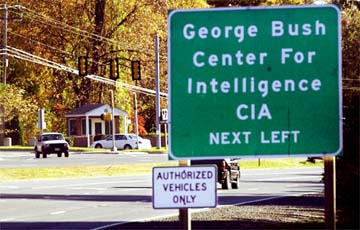
"Fly and enjoy America's great destination spots. Get down to Disney World in Florida. Take your families and enjoy life, the way we want it to be enjoyed"
-- Remarks by the President to Airline Employees. September 27, 2001

www.whitehouse.gov/news/releases/ 2001/09/20010927-1.html

"Our enemies . . . never stop thinking about new ways to harm our country and our people, and neither do we."
-- George Walker Bush
on August 5, 2004

"if you believe there is no such thing as a winner in a nuclear exchange, that argument [of nuclear overkill] that argument makes no sense. I don't believe that. You have a survivability of command and control, survivability of command and control ... industrial potential, protection of a percentage of your citizens, and you have a capacity that inflicts more damage on the opposition than it can inflict upon you. That's the way you can have a winner [in a nuclear war]"
-- George Herbert Walker Bush (the first George Bush), quoted in Robert Scheer, "With Enough Shovels: Reagan, Bush and Nuclear War" (1982)
"If this were a dictatorship, it would be a heck of a lot easier, just so long as I'm the dictator."
-- George W. Bush
, December 18, 2000

"A dictatorship would be a heck of a lot easier, there's no question about it."
-- George W. Bush, July 26, 2001

"There ought to be limits to freedom!"
- George W. Bush, commenting on gwbush.com web site May 21, 1999

"The Bush people have no right to speak for my father. Yes, some of the current policies are an extension of the '80s. But the overall thrust of this administration is not my father's -- these people are overly reaching, overly aggressive, overly secretive, and just plain corrupt. I don't trust these people."
"And the weapons of mass destruction? Whatever happened to them? I'm sure we'll find some. They're being flown in right now in a C-130."
- Ron Reagan Jr

"But why should we hear about body bags, and deaths, and how many, what day it's gonna happen, and how many this or what do you suppose? Or, I mean, it's, it's not relevant. So why should I waste my beautiful mind on something like that?"
- Barbara Bush on "Good Morning America," 3/18/2003

Barbara Bush Threatens Democratic Presidential Candidates
Barbara Bush:" you can criticize me, but don't criticize my children and don't criticize my daughters-in-law and don't criticize my husband, or you're dead."
CNN Larry King Live - Interview With Barbara Bush - October 22, 2003
www.cnn.com/TRANSCRIPTS/0310/22/lkl.00.html
CHENEY DID IT!

Bush Family Values
www.hereinreality.com/familyvalues.html

The Bush family has closer ties to the bin Laden family than any links between Saddam Hussein and al-Qaeda. However, the Saudis weren't in charge of air defense over New York and Washington on 9/11.

Bush - Bin Laden financial connections
Carlyle Group, Arbusto Energy (W's first failed business effort)
Marvin Bush (W's brother) and his 9-11 connection:
Securacom - a company that did security for Dulles and Logan airports
"Security, Secrecy and a Bush Brother By Margie Burns"
www.scoop.co.nz/mason/stories/HL0301/S00032.htm
www.commondreams.org/views03/0204-06.htm

www.nathanielblumberg.com/neil.htm
The connections between the Hinckley and Bush families

George HW Bush: JFK in Dallas

The Bush Clan www.themoscowtimes.com/stories/2003/12/05/120.html

Chinese mega-bucks for Bush brothers
www.onlinejournal.com/Special_Reports/121603Burns/121603burns.html

www.voxfux.com/features/bush_body_count.html
People With Connections To The Bush Dynasty Who Met With Suspicious And Untimely Deaths


www.awolbush.com George W. Bush's (short) tour of duty in the Air National Guard


-- May 2002 New York City newspaper headlines (Post and Daily News) --
911 - the pretext for a police state

www.salon.com/opinion/feature/2004/03/19/bush_encounter/index_np.html

"Who cares what you think?"
That's what President Bush shot back at me when I told him what I thought of his performance. As November approaches, I have to thank him for pointing me toward exactly the right question.
- - - - - - - - - - - - - - - - - - - - - - - - - - - - - - - - - - - -

By Bill Hangley Jr.
March 19, 2004 |
It has been almost three years since I spoke with the president of the United States, and I still get mail about it.
It was July 4, 2001, and we were both at one of those things that the late historian Daniel Boorstin would have labeled a "pseudo-event:" A church picnic in Philadelphia, designed to help George W. Bush promote his faith-based policies. I was working at the time for a local nonprofit that had helped set it up, but I had some serious misgivings about the president's performance up to that point, and being a part of the whole operation had left me feeling a bit like a pseudo-person. So when I had the chance to shake Bush's hand, I said, "Mr. President, I'm very disappointed in your work so far. I hope you only serve four years."
His smiling response was swift: "Who cares what you think?"


Minutes before the speech, an internal television monitor showed the president pumping his fist. "Feels good," he said.
-- from War begins in Iraq with strikes aimed at `leadership targets' Knight Ridder Newspapers, Thu, Mar. 20, 2003
www.realcities.com/mld/krwashington/5434637.htm

George W. Is High on Killing - www.davidcogswell.com
Every once in a while we experience one of those little moments when a small tear breaks through the social fabric and allows us a glimpse of its underlying workings.
A Knight Ridder reporter was treated to such a rare glimpse and apparently couldn't resist including it in his story, though it was tangential to the narrative. And no editor cut it out, so we are left with a gem, a glimpse into the strange personality of George W.
The article was a description of Bush's speech announcing that he had ordered strikes to begin on Iraq.


Pretzels for Peace - San Francisco peace rally, October 26, 2002


Associated Press, 7 March 2000
OTTAWA - Stung by a quiz about foreign leaders earlier in his campaign, presidential candidate (George W. Bush now has fallen victim to a foreign-affairs prank.
Canadians are chuckling over his on-air answer when a comic posing as a reporter made up a story that Canadian Prime Minister "Jean Poutine" had endorsed him. "I appreciate his strong statement; He understands I believe in free trade," Bush replied.
Canada's prime minister is Jean Chretien, not Poutine, and he has endorsed no one in U.S. politics. Poutine is a fast-food meal of french fries, gravy and cheese curd popular in Quebec.
The stunt was pulled by comic Rick Mercer from "This Hour Has 22 Minutes," a satirical TV show in Canada.


Nikos Levis wrote:
paraphrasing what I just saw on CNN... 11:55 a.m. EST on Mon., Dec. 15, 2003... Bush had already said he didn't want "political" questions, i.e. about candidates, the election, or opposing views. And then...
Q. Mr. Pres., I know we're not supposed to ask political questions but Howard Dean suggested you may have had foreknowledge of September 11th. Do you agree with RNC head (Whatisname) that this qualifies as political hate speech?*
Bush (visibly panicked). Political... political... uh... insinuation. (End of response. Less than 10 seconds.)
The reporter seized this opportunity to pose an "unrelated follow-up question," to general merriment.
(* - So now asking who knew what when is characterized not as inquiry but as hate, according to this... stupid reporter! Does THAT qualify as hate speech?)

Bush whistleblower's commentary (former Lt.Col. in Texas National Guard)
http://onlinejournal.com/Commentary/031903Burkett/031903burkett.html

So when asked by many "what should we do?" on this beautiful, but very sad morning, I can't help but remind everyone that for over three years, since the spring 2000 campaign, I have forecasted the actions that have taken place in great detail. I know GW Bush and his inner circle very well.
As I said, a UN vote would not stop GW Bush from attacking Iraq. Nor will anything else. And weapons of mass destruction will be discovered in great quantities; but the entire affair will stink to high heavens because it will be as staged as the White House press conference you just viewed.
The human death toll will publicly not be mentioned, yet in truth, it will far exceed 120,000. Our vast size and force will quickly break the back of any Iraqi resistance, yet we will not break their spirit. This is a society which has learned to live in troubled politics. They will go about their business while seething inside. There will be small uprisings, but they will quickly be crushed. The emotion and anger that we will have built will spill over into other countries and meld like an alloy with other problem areas of the Middle East, becoming a deeper seated problem. We will have insured that America's dynasty is nearing an end.
While GW Bush will be cast as a conquering hero by his political team and accepted by the population as such, history will treat him as Napoleonic. Bush will reach a new lofty level of acceptance by first fear and then staged triumph. Those who waited too long to gain their voice will lose their voice again.
America will over pledge economically in order to establish this new footprint; but the economic worth will not go to offset our fiscal investment, or to the Iraqi people. Iraq will be stripped by the vanquishers; the major corporations, who will then control not only the assets, but the cash flow. Their names will be Mobil, Exxon, Halliburton and the likes. ....
We must now revert to the history of Europe to discern what to do. We must study the nemesis of France and how Napoleon was felled before understanding the damage a tyrant does to a nation and society. We must examine the ruthless and dictatorial rise of yet another of the three small men—one whose name is not spoken out of fear of reprisal, but his name was Adolf. We must examine history, in order to not repeat it, and to understand the mesmerism of a public to a murderous scheme. Three small men who wanted to conquer . . . and vanquish. Each created a need for a balancing throng; history then recorded the damage from a far better perspective.
More than one French or German household now sits watching the US expending her virtue through the tools of greed, anger and vengeance. And they caution us. They caution that out of this strong arm tactic will bring about the rise of a United Europe or Asia to counterbalance an arrogant superpower.
I do not believe that this world can, or will, stand idly by. While many will rally to the side of this conqueror, there must be a steadfast collective group who hold their ground, their principles and the Constitution of this land. For there is never found the word "King" within that great architecture of Democracy, or as the Republicans like to say this "Republic". There is only the structure of an equally shared and responsible government "of, by and for the people" anchored within the principles of defense rather than attack.
.... Burkett served as State Plans Officer for the Texas Army National Guard and Governor George W. Bush. After refusing to follow direct orders involving falsifying readiness reports, Burkett sought "whistleblower" status for reports involving anti-Semitic activity; personnel fraud; readiness fraud and the alteration of the personal military file of Governor George W. Bush.


There is a basic weakness in governments, however massive their armies, however wealthy they are, however they control the information given to the public, because their power depends on the obedience of citizens, of soldiers, of civil servants, of journalists and writers and teachers and artists. When these people begin to suspect they have been deceived, and withdraw their support, the government loses its legitimacy, and its power.
We have seen this happen in recent decades, all around the globe. Leaders who were apparently all-powerful, surrounded by their generals, suddenly faced the anger of an aroused people, the hundreds of thousands in the streets and the reluctance of the soldiers to fire, and those leaders soon rushed to the airport, carrying their suitcases of money with them.
The process of undermining the legitimacy of this government has begun. There has been a worm eating at the innards of its complacency all along - the knowledge of the American public, buried, but in a very shallow grave, easy to disinter, that this government came to power by a political coup, not by popular will.
-- Howard Zinn
www.commondreams.org/views03/0227-12.htm


Ten days ago in Washington DC, some of the smartest people I know in information security repeatedly said things like, Bush has gone about this the wrong way. He believes he’s right so deeply that nothing can stop him. Now we’ve got to try to salvage the situation.
These are not knee-jerk responses, mind you, these are people who understand the threats. They listen to intercepts and hear terrorists plan our demise. What we hear, one told me, scares us shitless. ....
Empathy is required for winning the peace if not for winning the war. Understanding the feelings of human beings and the consequences of our actions seems like a minimal requirement for policy and planning but apparently its not. The capacity to get outside ourselves and feel what others feel does not mean surrendering our self-interest in some naive belief that others are better than ourselves because they’re not--there is no moral high ground when the shooting starts--but it does mean understanding who others are because then we remember who we are too and then we might remember that mutual self- interest is best served by a vision that sees further than the middle of next week.
March 27, 2003
War, Peace and Bureaucracy - The Problem of Empathy By RICHARD THIEME
www.counterpunch.org/thieme03272003.html


Behind the Bushes: Fortunate Son by J.H. Hatfield, Reviewed by David Cogswell
www.davidcogswell.com/Reviews/FortunateSonReview.html


Kevin Phillips
American Dynasty: Aristocracy, Fortune, and the Politics of Deceit in the House of Bush
www.americandynasty.net/excerpts.htm

.... in examining two Bush presidencies and the family's four-generation pursuit of national prominence and power - and in doing so through a lens that highlighted elite associations, dynastic ambitions, and recurring financial and business practices - I found a greater basis for dismay and disillusionment than I had imagined. The result is an unusual and unflattering portrait of a great family (great in power, not morality) that has built a base over the course of the twentieth century in the back corridors of the new military-industrial complex and in close association with the growing intelligence and national security establishments. In doing so, the Bushes have threaded their way through damning political, banking, and armanents scandals and, since the 1980s, controversies like the October Surprise, Iran-Contra, and Iraqgate imbroglios, which in another climate or a different time might have led to impeachment.
I am not talking about ordinary lack of business ethics or financial corruption. During the late twentieth century, several other presidents and their families displayed these shortcomings, and the public has become understandably blase. Four generations of building toward dynasty, however, have infused the Bush family's hunger for power and practices of crony capitalism with a moral arrogance and backstage disregard of the democratic and republican traditions of the U.S. government. As we will see, four generations of involvement with clandestine arms deals and European and Middle Eastern rogue banks will do that.

Were history to posit a "Bush era," lasting from George H. W. Bush's triumph in 1988 through 2008, the two family presidencies might well define the entire two decades, turning the Clinton years into the political equivalent of sandwich filler. On the other hand, were Senator Hillary Clinton to achieve in 2008 a second restoration, this one Clintonian, public perception might well lurch toward some American equivalent of the fifteenth-century Wars of the Roses, during which the English Crown was contested by the houses of York and Lancaster. ....

When Nixon, in turn, won the presidency in 1968, he would treat George H. W. Bush, a first-term congressman, as befit the son of Prescott Bush. The younger Bush had also been commended to Nixon by former Republican presidential nominee Thomas E. Dewey, probably the one man most responsible for convincing Dwight Eisenhower to take Nixon as his running mate back in 1952. Thus did the Nixon administration become the all-important career elevator for the little-known U.S. representative from Houston.
Eastern patricians, even the oil-stained variety, were rare in the Nixon entourageóand for that matter, rare in national Republican elective politics. Nixon wore them as badges of social acceptance; he had taken one, former U.S. senator Henry Cabot Lodge of Massachusetts, as his vice presidential running mate in 1960. Eight years later, he let the name of George H. W. Bush make the vice presidential rumor mills, less because of any possible appeal Bush might have in Texas than for the socioeconomic reassurance he would offer to New York and Connecticut Republican donors and Ivy League clubland.
Appointments to the United Nations (1970) and the Republican National Committee (1973) brought Bush cabinet and Nixon-inner-circle status, maintaining the Washington visibility critical to his future. Nixon valued Bush's family connections, gung ho spirit, personal likability, and social outreach. Similar considerations helped to guide President Fordís 1975 selection of him to head the CIA, a famous repository of Yale alumni. Bush wanted to beóand perhaps was - taken as qualified for the cabinet in the unelected, bred-to-it manner of a Curzon, Cecil, or Lansdowne in Edwardian England.
This, to be sure, is getting ahead of our story. What made it possible to consider Bush for vice president in 1968, almost out of the blue, was that some fifty years earlier, his two grandfathers - George Herbert Walker, a well-connected St. Louis financier, and Samuel Prescott Bush, a wealthy Ohio railroad equipment manufacturer - had managed to implant themselves and their descendants in the eastern establishment. This helped Prescott Bush get ahead, much as later connections helped George H. W. and George W.
To tell their tale, American Dynasty unfolds like this: Chapter 1 introduces the Bushes as our "not-quite-royal family." Iím not being facetious here. The Bush royal connections documented in Burke's Peerage and elsewhere have nourished the self-image of both chief executives. However, the real founding father of the Bush clan was not a Bush, but a Walker - George H. Walker, for whom both the forty-first and forty-third presidents are named.


war criminal

www.chron.com/cs/CDA/story.hts/editorial/outlook/2357946
Jan. 16, 2004, 9:34PM
Bush-Saudi ties deserve hard look
By KEVIN PHILLIPS

Dynasties in American politics are dangerous. We saw it with the Kennedys, we may well see it with the Clintons and we're certainly seeing it with the Bushes. Between now and the November election, it's crucial that Americans come to understand how four generations of the current president's family have embroiled the United States in the Middle East through CIA connections, arms shipments, rogue banks, inherited war policies and personal financial links.

As early as 1964, George H.W. Bush, running for the U.S. Senate from Texas, was labeled by incumbent Democrat Ralph Yarborough as a hireling of the sheik of Kuwait, for whom Bush's company drilled offshore oil wells. Over the four decades since then, the ever-reaching Bushes have emerged as the first U.S. political clan to thoroughly entangle themselves with Middle Eastern royal families and oil money. The family even has links to the bin Ladens-- although not to family black sheep Osama bin Laden -- going back to the 1970s.

How these unusual relationships helped bring about 9/11 and then distorted the U.S. response to Islamic terrorism requires thinking of the Bush family as a dynasty. The two Bush presidencies are inextricably linked by that dynasty.

The first family member lured by the Middle East's petroleum wealth was George W. Bush's great-grandfather, George H. Walker, a buccaneer who was president of Wall Street-based W.A. Harriman & Co. In the 1920s, Walker and his company participated in rebuilding the Baku oil fields only a few hundred miles north of current-day Iraq. As senior director of Dresser Industries (now part of Halliburton), Walker's son-in-law Prescott Bush (George W. Bush's grandfather) became involved with the Middle East in the years after World War II. But it was George H.W. Bush, the current president's father, who forged the dynasty's strongest ties to the region.

George H.W. Bush was the first CIA director to come from the oil industry. He went on to become the first vice president -- and then the first president -- to have either an oil or CIA background. This helps to explain his persistent bent toward the Middle East, covert operations and rogue banks such as the Abu Dhabi-based Bank of Credit and Commerce International, or BCCI, which came to be known by the nickname "Bank of Crooks and Criminals International." In each of the government offices he held, he encouraged CIA involvement in Iran, Pakistan, Afghanistan and other Middle Eastern countries, and he pursued policies that helped make the Middle East into the world's primary destination for arms shipments.

Taking the CIA helm in January 1976, Bush cemented strong relations with the intelligence services of both Saudi Arabia and the shah of Iran. He worked closely with Kamal Adham, the head of Saudi intelligence, brother-in-law of King Faisal and an early BCCI insider. After leaving the CIA in January 1977, Bush became chairman of the executive committee of First International Bancshares and its British subsidiary, where, according to journalists Peter Truell and Larry Gurwin in their 1992 book False Profits, Bush "traveled on the bank's behalf and sometimes marketed to international banks in London, including several Middle Eastern institutions."

Once in the White House, first as vice president to Ronald Reagan and later as president, George H.W. Bush was linked to at least two Middle East-centered scandals. It's never been entirely clear what Bush's connection was to the Iran-Contra affair, in which clandestine arms shipments to Iran, some BCCI-financed, helped illegally fund the operations of the anti-Sandinista Contra rebels in Nicaragua. But in 1992, special prosecutor Lawrence E. Walsh asserted that Bush, despite his protestations, had indeed been "in the loop" on multiple illegal acts.

Much clearer was Bush's pivotal role, both as vice president and president, in "Iraqgate," the hidden aid provided by the United States and its military to Saddam Hussein's Iraq in its high-stakes war with Iran during the 1980s. The United States is known to have provided both biological cultures that could have been used for weapons and nuclear know-how to the regime, as well as conventional weapons. As ABC-TV broadcaster Ted Koppel put it in a June 1992 Nightline program after the 1991 Persian Gulf War: "It is becoming increasingly clear that George (H.W.) Bush, operating largely behind the scenes through the 1980s, initiated and supported much of the financing, intelligence and military help that built Saddam's Iraq into the aggressive power that the United States ultimately had to destroy."

During these years, George H.W. Bush's four sons -- George W., Jeb, Neil and Marvin -- were following in the family footsteps, lining up business deals with Saudi, Kuwaiti and Bahraini moneymen and cozying up to BCCI. The Middle East was becoming a convenient family money spigot.

Eldest son George W. Bush made his first Middle East connection in the late 1970s with James Bath, a Texas businessmen who served as the North American representative for two rich Saudis (and Osama bin Laden relatives) -- billionaire Salem bin Laden and banker and BCCI insider Khalid bin Mahfouz. Bath put $50,000 into Bush's 1979 Arbusto oil partnership, probably using bin Laden-bin Mahfouz funds.

In the late 1980s, after several failed oil ventures, the future 43rd president let the ailing oil business in which he was a major stockholder and chairman be bought out by another foreign-influenced operation, Harken Energy. The Wall Street Journal commented in 1991, "The mosaic of BCCI connections surrounding Harken Energy may prove nothing more than how ubiquitous the rogue bank's ties were. But the number of BCCI-connected people who had dealings with Harken -- all since George W. Bush came on board -- likewise raises the question of whether they mask an effort to cozy up to a presidential son."

Other hints of cronyism came in 1990 when inexperienced Harken got a major contract to drill in the Persian Gulf for the government of Bahrain. Time magazine reporters Jonathan Beaty and S.C. Gwynne, in their book The Outlaw Bank, concluded "that Mahfouz, or other BCCI players, must have had a hand in steering the oil-drilling contract to the president's son." The web entangling the Bush presidencies was already being spun.

Second son Jeb Bush, now the governor of Florida, spent most of his time in the early and mid-1980s hobnobbing with ex-Cuban intelligence officers, Nicaraguan Contras and others plugged into the lucrative orbit of Miami-area front groups for the CIA. But he, too, had some Middle East connections. Two of his business associates, Guillermo Hernandez-Cartaya and Camilo Padreda, both indicted for financial dealings, were longtime associates of Middle Eastern arms dealer, BCCI investor and Iran-Contra figure Adnan Khashoggi.

Prosecutors dropped the case against the two, and a federal judge ordered Padreda's name expunged from the record. But a few years later Padreda, a former Miami-Dade County GOP treasurer, was convicted of fraud over a federally insured housing development that Jeb Bush had helped to facilitate. Jeb Bush also socialized with Adbur Sakhia, the Miami BCCI branch chief and later its top U.S. official.

Neil Bush, most famous for the scandal surrounding the corrupt practices of Colorado's Silverado Savings & Loan, where he served as a director during the 1980s, also picked plums from Persian Gulf orchards. In 1993, after his father left the White House, Neil went to Kuwait with his parents, brother Marvin and former Secretary of State James A. Baker III. When his father left, Neil stayed to lobby for business contracts, and after returning home evolved a set of lucrative relationships with Syrian-American businessman Jamal Daniel. One of their ventures, Ignite!, an educational software company, also included representatives of at least three ruling Persian Gulf families.

The Bush family's Middle Eastern commercial focus is further exemplified by Marvin, the youngest brother of the current president. From 1993 to 2000 he was a major shareholder, along with Mishal Youssef Saud al Sabah, a member of the Kuwaiti royal family, in the Kuwait-American Corp., which had holdings in several U.S. defense, aviation and industrial security companies.

George H.W. Bush's own Persian Gulf relationships kept expanding. While serving in the Reagan White House during the 1980s, he was known in the Middle East as "the Saudi vice president," and a New Yorker article last year described the Saudi ambassador to the United States as "almost a member of the (Bush) family." Indeed, many saw the 1991 Gulf War to expel Iraq from Kuwait as an outgrowth of Bush's close ties to the oil industry and to Persian Gulf royal families, who felt threatened by Saddam's expansionism.

After losing his bid for a second term as president, Bush joined up in 1993 with the Washington-based Carlyle Group. Under the leadership of ex-officials such as Baker and former Defense Secretary Frank C. Carlucci, Carlyle developed a specialty in buying defense companies and doubling or quadrupling their value. The ex-president not only became an investor in Carlyle, but a member of the company's Asia Advisory Board and a rainmaker who drummed up investors. Twelve rich Saudi families, including the bin Ladens, were among them. In 2002, The Washington Post reported, "Saudis close to Prince Sultan, the Saudi defense minister ... were encouraged to put money into Carlyle as a favor to the elder Bush." Bush retired from the company last October, and Baker, who lobbied U.S. allies last month to forgive Iraq's debt, remains a Carlyle senior counselor.

If the 1991 war with Iraq and its aftermath cemented the Bush ties with oil elites and royalty in the Middle East, it angered Islamic true believers and radicals. By the late 1990s, many of the Islamic insurgents who had been mobilized by the CIA and others to chase the Soviets out of Afghanistan were becoming increasingly anti-American. They found a kinship with Osama bin Laden, the renegade of his billionaire Saudi family, who was outraged at the U.S. presence in Saudi Arabia.

When the United States launched a second war against Iraq in 2003 but failed to find weapons of mass destruction that Saddam was purported to have, international polls, especially those by the Washington-based Pew Center, charted a massive growth in anti-Bush and anti-American sentiment in Muslim parts of the world -- an obvious boon to terrorist recruitment. Even before the war, some cynics had argued that Iraq was targeted to divert attention from the administration's failure to catch Osama bin Laden and stop al-Qaida terrorism.

Bolder critics hinted that George W. Bush had sought to shift attention away from how his family's ties to the bin Ladens and to rogue elements in the Middle East had crippled U.S. investigations in the months leading up to 9/11. Sen. Charles E. Schumer, D-N.Y., complained that even when Congress released the mid-2003 intelligence reports on the origins of the 9/11 attack, the Bush administration heavily redacted a 28-page section dealing with the Saudis and other foreign governments, leading him to conclude, "There seems to be a systematic strategy of coddling and cover-up when it comes to the Saudis."

There is no evidence to suggest that the events of Sept. 11 could have been prevented or discovered ahead of time had someone other than a Bush been president. But there is certainly enough to suggest that the Bush dynasty's many decades of entanglement and money-hunting in the Middle East have created a major conflict of interest that deserves to be part of the 2004 political debate. No previous presidency has had anything remotely similar. Not one.

[note: actually, there is a lot of evidence for that ...]

Phillips' new book, American Dynasty: Aristocracy, Fortune and the Politics of Deceit in the House of Bush, has just been published by Viking Penguin. A review of the book can be found in today's Zest.


www.fortbendstar.com/Archives/2003_4q/122403/n_Woman%20who%20filed%20lawsuit%20found%20dead.htm

Woman who filed lawsuit found dead

By Barbara Fulenwider
The Fort Bend County woman would filed a December, 2002 lawsuit against former governor and current sitting President George W. Bush was found dead in September in her Lake Village home in Sienna Plantation.
Margie D. Schoedinger of Missouri City, Texas, filed a lawsuit against George W. Bush in Fort Bend County Court. In her suit she alleged, "race based harassment and individual sex crimes committed against her and her husband." The suit lists numerous offenses and asks for actual damages, punitive damages and judgments against George W. Bush.
In her suit, among the many allegations, she has stated, "On or about, October 26, 2000, an attempt was made to abduct Plaintiff (Schoedinger) by three unknown assailants. Because of the actions of these assailants, Sugar Land police officers were dispatched to the scene. In the end, no report was taken. The assailants were treated respectfully and allowed to go free while Plaintiff (Schoedinger) was repeatedly and aggressively questioned. After filing a lawsuit, the Plaintiff's family and past contacts were questioned and harassed."
Schoedinger, goes on to allege "at some point, Plaintiff contacted the Houston office of the Federal Bureau of Investigation, filing a raced based harassment complaint, advising that the Sugar Land Police Department may or may not be harassing Plaintiff on behalf of her neighbors in Sugar Land or possibly on behalf of the First Colony Community Services Association."
Schoedinger further states in her lawsuit, "The (FBI) agent in question advised Plaintiff that the situation appeared to be highly organized and most likely higher level, such as a racist organization."
Furthermore she states, "Throughout this conversation, she learned that there was no time that the Defendant (Bush) ever stopped watching Plaintiff', nor did he stop having sex with Plaintiff. The sole concern of the Defendant and his representatives was whether Plaintiff could actually recall the individual sex crimes committed against Plaintiff and Plaintiff's husband, utilizing drugs.
Section VII of the lawsuit states; "Whether or not Plaintiff's husband was raped remains in question, as Plaintiff was drugged after she was raped and her husband was drugged before her rape. Plaintiff can only state that these men purported to be FBI agents raping her for the purpose of covering for how many times they had drugged her and allowed the Defendant to rape her in the same manner."
She also alleges that in writing letters directly to the Federal Bureau of Investigation, Houston Office," instead of assisting Plaintiff with her concerns, the FBI took on the same demeanor as the Sugar Land Police Department. Eventually, she learned, she alleges in her suit "via telephone conversations, that both the Sugar Land Police Department, and the Houston Office of the Federal Bureau of Investigation were acting at the behest of the Defendant, George W. Bush. As a part of their defense, the Sugar Land Police Department conducted a background investigation into Plaintiff's past activities. In the end, this investigation yielded the following information: Plaintiff had seven dates, (which became seven lovers), had told no lies, committed no crimes, gotten 2 traffic tickets and dated George W. Bush as a minor."
Ms. Schoedinger's lawsuit was filed in Fort Bend County Court at Law 3. She is listed as her own legal representative. The case never progressed past the beginning stages, as George W. Bush was never served with the suit.
Numerous attempts to reach Ms. Schoedinger over the last year both by phone and in person at her residence were unsuccessful.
According to documents from the Sheriff's Department, Justice of the Peace Ike Fredrickson's office and the Harris County Medical Examiner's Office, Schoedinger was found deceased in her home apparently suffering from a single gunshot wound to the head. Justice of the Peace 'Ike' Fredrickson ordered an autopsy.
At the time of her death Ms. Schoedinger had not been seen by or had any contact with her family for about a week. Her sister and a local real estate agent called law enforcement personnel to her home. The officer searched the home finding Schoedinger's purse and other personal property in her vehicle in the garage. The officer found the master bedroom door locked. The officer's report reflects that inside the master bedroom he located Margie D. Schoedinger. She was lying on the bed having sustained a single gunshot wound to the head.
Detective Kelly Walger with the Fort Bend County Sheriff's Department investigated the alleged suicide. In his report Walger writes that he contacted the victim's husband, and released the weapon, a Glock handgun, and all other personal effects. On September 22, 2003 Margie D. Schoedinger's body was taken from her home in the Sienna Plantation area to the Harris County Medical Examiner's Office.
Based on the findings from the Medical Examiner's office has ruled her death a suicide. Walger's report indicates that the case was closed based on the findings of suicide by the Harris County Medical Examiner's Office.
Her death certificate is on file in Fort Bend County Clerk's Office.


D-Dubya-I www.thesmokinggun.com/archive/bushdui1.html

Curious George
http://home.nyc.rr.com/jadedem/gw1.html